Training Part-Time Office Staff on an Auction Program
Turnover is part of the sale barn business, so the real question is how many sales pass before a new hire is useful.
September 30, 2026 · 4 min read
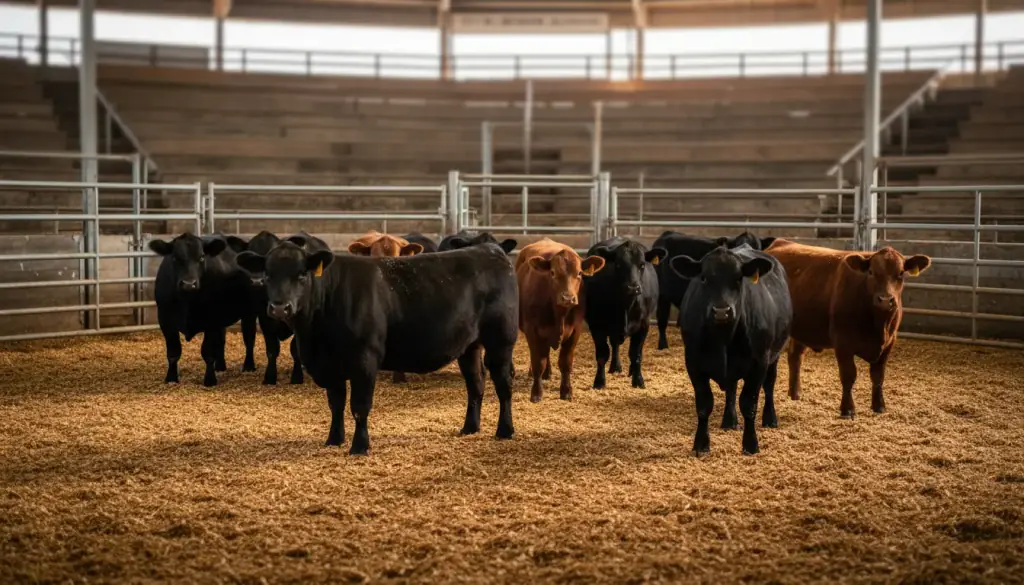
Sale barn office work has a staffing pattern most businesses do not. The crew gets very busy one or two days a week and is often made up of part-timers. People move on, people retire, somebody's niece goes back to school. Whatever program your barn runs, the next person to sit down at it will have never seen it before, and how quickly that person becomes useful is a real cost.
Teach one seat at a time
A sale barn office is really four or five jobs sharing a room: check-in, ring clerking, penning, the office desk, and sometimes the tack clerk or the info screens. New hires get overwhelmed when they are shown everything at once. Pick the one seat they will actually sit in and teach only that. A check-in clerk does not need to know how the custodial account balances in week one.
Then write down the routine for each seat in plain words, one page, by the person who does it best. The exercise catches steps that live only in someone's habits, like what to do when a seller comes up with a lien on the record. The page also becomes your training material for the next person.
Practice off the clock, then sit beside them live
Nobody learns a clerk screen at the pace of a live ring. If you can, run a practice sale on a slow day. Check in a few made-up sellers, clerk a few lots, write a few invoices and close it out. Mistakes made on a practice day cost nothing. The same mistakes on sale day cost a buyer's patience.
Then put the new person beside an experienced one for a first live sale, with the veteran's hands off the keyboard. The urge to grab the keys and fix it is strong, and it teaches nothing. Let the new person make the keystrokes, and let the veteran say what comes next.
Why a familiar program is easier to teach
Part of the training burden is simply learning the computer. A program that behaves like every other Windows program, with menus where you expect them and several windows you can open side by side, removes a whole layer. U.S. Livestock Systems chose to be an all-Windows program for that reason. In its own words, with a high turnover rate among sale barn employees, having a well-known program is a good thing.
Randy Power, the founder, has been in livestock auction software since 1997, and the company teamed up with Amstar Software in 2004 to build a true all-Windows system. Sharelle Williams at Livestock Auction, LLC in Green Forest, AR, wrote that the ladies in the office were used to DOS and had never run a Windows program, and then added: "We have all found this system very easy to comprehend, less time consuming and it has made things go a lot smoother."
What other barns say about getting new staff going
Daviess County Livestock Market in Gallatin, MO, says: "This system is so easy to learn and train that it took one sale to train everyone." Euclid Stockyards in Ontario, CA, says: "Training new employees on this system has been very easy." Nancy Schrock at Midwest Exchange Regional Stockyards in Mexico, MO, says: "Anybody can use this system; you don't have to be a computer genius."
Keep in mind that these are testimonials the vendor publishes about its own product, so weigh them that way. When you evaluate any program, ask to talk to a barn about your size and ask that barn how its last new hire got on.
Put help within reach
Training does not end after the first sale. Somebody will forget a step in the middle of a sale, and the question is what happens next. The Ring Clerking screen has an on-screen help menu, and U.S. Livestock Systems offers 24/7 support by telephone and remote access. Debbi Shannon at Douglas County Livestock in Ava, MO, says the technical support "has always been fast, friendly and ready to help us through any situation."
A plan for a new part-timer does not need to be fancy. It needs to exist, and it needs to be the same every time.
- Pick one seat and teach only that seat first.
- Walk through a finished sale on a slow day using the real screens.
- Sit beside them for their first live sale, with your hands off the keyboard.
- Give them a one-page routine for that seat, written by the person who does it best.
- Make sure they know who to call, and that the answer is a phone number, not a guess.
A barn that can get a new person productive in a sale or two can afford turnover. A barn that needs a season cannot. If you want to see what learning the screens looks like before you commit, call (573) 682-1080 for the password to the U.S. Livestock Systems demo videos.
U.S. Livestock Systems, Inc., (573) 682-1080
Call (573) 682-1080More articles
Where the Hours Go on Sale Day
The ring moves as fast as the cattle do, so the hours that push a sale past dark are almost always somewhere else in the building.
Why Keyboard-Only Ring Clerking Protects Your Numbers
The clerk's screen is where every invoice, check and report begins, so attention saved there pays off all the way to settlement.