Where the Hours Go on Sale Day
The ring moves as fast as the cattle do, so the hours that push a sale past dark are almost always somewhere else in the building.
September 30, 2026 · 4 min read
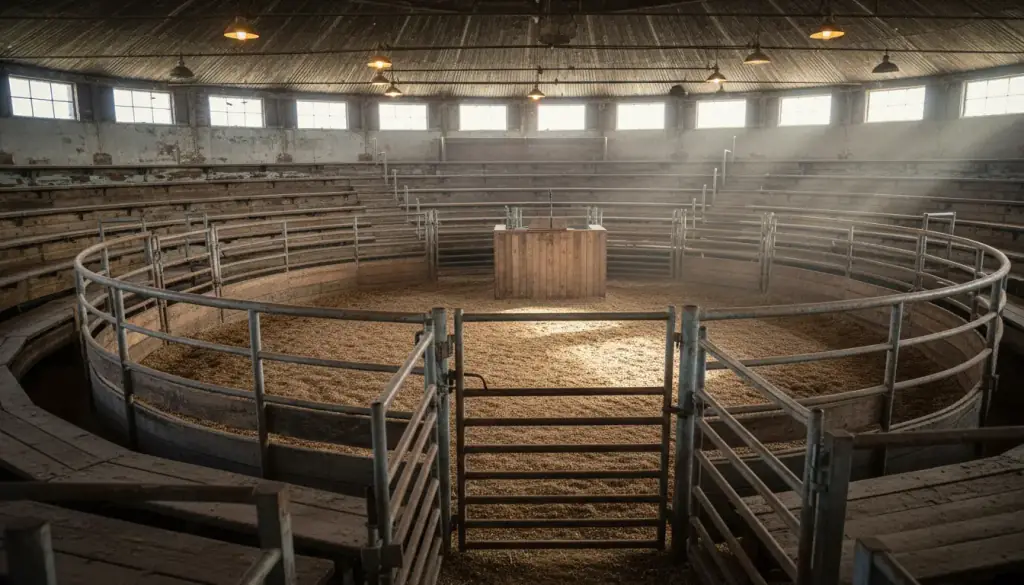
Ask any sale barn owner how long the sale ran and you will get two answers. One is the time the last head sold. The other is the time the last check went out the door. The gap between those two times is where most of the long nights come from, and it has very little to do with how fast the auctioneer talks. The ring moves as fast as the cattle do. The office moves as fast as the slowest step behind it.
The ring is rarely the slow part
A ring that is running well sells a group in well under a minute. Nobody in the building can speed that up much without hurting the sale itself. What you can change is everything that feeds the ring and everything that drains it. Feeding it means sellers checked in, tags matched to descriptions, pens assigned and animals coming through in the right order. Draining it means tickets written, buyers recorded, weights captured and a clear record of who bought what.
When any of those steps waits on another, the ring starts to stall, and a stalled ring is expensive. Buyers sitting on their hands get restless. Sellers who hauled a long way start watching the clock. The auctioneer slows down to give the clerk room, and every group after that inherits the delay.
Check-in sets the pace for the whole day
Sale day is won or lost at the scale house and the check-in desk, long before the first bid. A seller who pulls in with a load and no record on file costs you minutes. A seller whose lien never got flagged can cost you a great deal more. Everything the office knows about a seller should come up the moment the name does, including liens, trucking, vet and feed charges, and a description of what is on the truck.
The same goes for the animals. Checking livestock in by slip or tag, as single tags or group tags, sounds like clerical detail. It is the foundation the ring clerk, the penner and the settlement clerk all stand on. A mistake at check-in is cheap to fix at check-in. The same mistake found at settlement means phone calls, re-weighs and a seller waiting at the counter.
The hand-offs between people cost more than the work
Watch a busy sale from the office door and count the times one person waits for another. The clerk waits on the penner to confirm a pen. The penner waits on the clerk to finish a ticket. The office waits on the ring to wrap up so settlement can start. Each wait is small. Across a full run of lots they add up to the hours that push the last check past dark.
Software helps here mostly by making work visible to the next person. U.S. Livestock Systems built a split screen into Ring Clerking so a clerk can keep working ahead while the auctioneer finishes the previous group. The Penning module puts the pen on the screen as animals leave the ring, so the penner sees a buyer's animals coming instead of waiting to be told. Neither feature is flashy. Both remove a wait.
Settlement is where sale days actually end
The ring can be empty by mid-afternoon and the office can still be working at midnight. Mitchell Livestock, LLC in Mitchell, SD, said of its old system: "With the old system, sales lasted 3-4 hours longer than they do now." Closing work is where a barn either gets its evening back or does not, because that is where the handwork lives.
Sellers want checks fast, and buyers want to settle up and go. Both depend on invoices that are right the first time. That is why time savings tend to come from fewer corrections, not from faster typing. A system that captures the sale once, at the block, and carries it through to the invoice, the check and the reports removes the retyping where errors creep in.
A short checklist for finding your own bottleneck
You do not need new software to start. On your next sale day, write down three times: when the last animal sold, when the last buyer was settled, and when the last seller's check was written. Then note every moment somebody stood waiting on somebody else, and ask these questions about each stage.
- Check-in: how long does a seller wait, and how often does someone look the same thing up twice?
- Ring: does the clerk ever fall behind the auctioneer, and what happens to the next group when that happens?
- Penning: does the penner find out where animals go before they arrive, or after?
- Settlement: how many tickets get corrected after the ring, and who catches them?
- Close: what has to be balanced before anyone can go home?
Those five answers tell you where your hours go. If most of them point at the office, the fix probably lies in how information moves between people, and that is the problem auction software exists to solve. If you want to talk through your own sale day with a family business that has spent years on this, call U.S. Livestock Systems at (573) 682-1080.
U.S. Livestock Systems, Inc., (573) 682-1080
Call (573) 682-1080More articles
Why Keyboard-Only Ring Clerking Protects Your Numbers
The clerk's screen is where every invoice, check and report begins, so attention saved there pays off all the way to settlement.
Closing Up After the Sale Without Losing Your Night
Closing the books on a sale day is a routine, and the barns that finish early treat it like one.